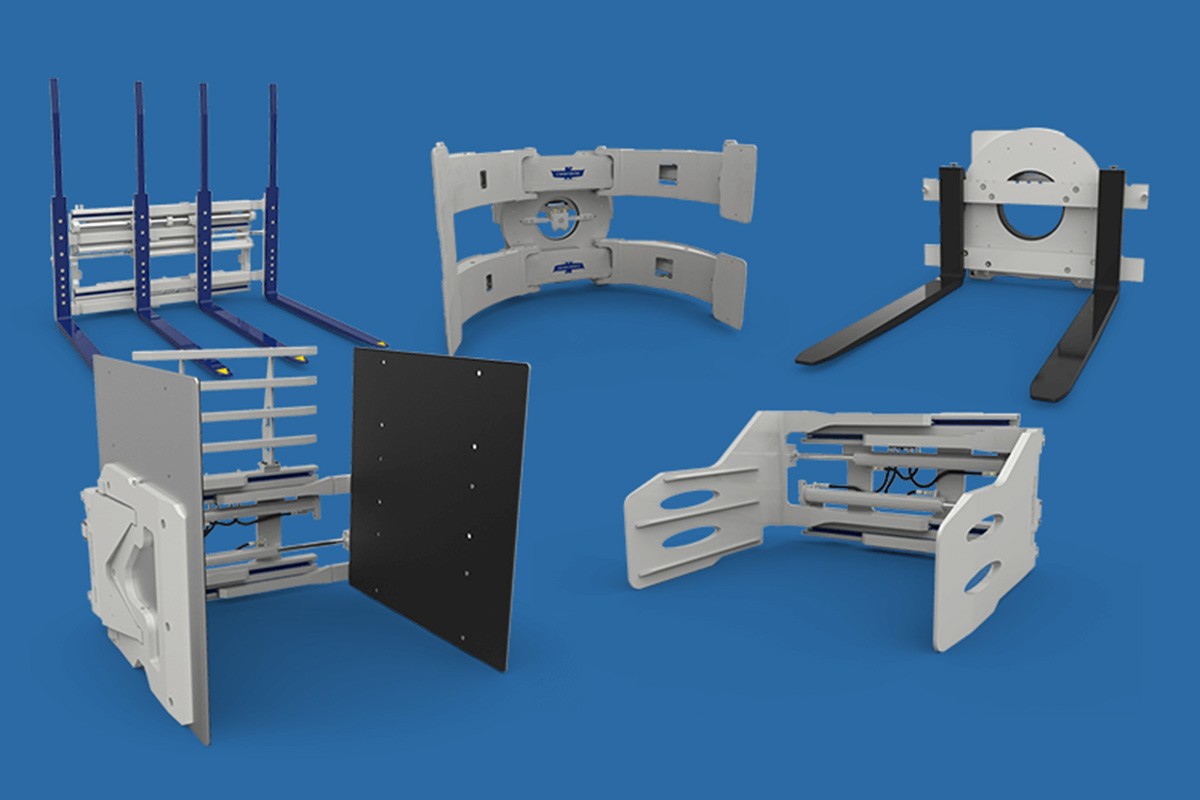



Cascade Corporation History
A specialized company in the manufacturing and sale of accessories for forklifts, with extensive experience in the forklift industry. Cascade's products are well-known for their quality and durability.
A wide range of accessories is available for electric, gas, and pallet jack forklifts. Cascade also offers comprehensive warranties for all its products. With a vast inventory of parts and accessories, the stock is regularly updated to align with the latest trends in the forklift industry.
The first year and expansion.
Cascade Manufacturing Company established in the year 1943 with a modest investment of just $7,500 in Portland, Oregon, it started as a small shop with only four employees. Initially engaged in cutting and assembling stainless steel valves and various pipe fittings, the company achieved impressive sales of $60,000 in its first year, 1948. After five years of operation, annual sales soared to $330,000, and the company expanded to employ 40 people.
The design and production of the first hydraulic cylinder opened up new business opportunities for Cascade in the 1950s. Cascade began designing, manufacturing, and distributing hydraulic attachments. In 1956, the company's headquarters were established in Portland, Oregon. After 15 years in business, sales increased to $2.3 million, and the workforce expanded to 180 employees. In 1959, Cascade expanded its operational base by establishing a second manufacturing facility in Springfield, Ohio. The following year, Cascade took a step into global production by establishing companies in the Netherlands, England, and Australia. In 1967, Cascade commenced operations in South Africa and acquired the business of CM Scott Fluid Power, LTD, a Canadian hydraulic cylinder manufacturer located in Toronto, Ontario. In 2005, China emerged as a significant forklift market, ranking third globally after the United States and Japan. To maintain its current market position in China, Cascade expanded its manufacturing capacity by establishing facilities in China and investing in Xiamen and HEBEI.
Economic and market contraction
In 1982, a severe economic downturn significantly impacted both the United States and Europe, leading to a 25% net sales decline and a reduction in employment from 1,175 to 750. The year 2009 marked the most challenging year in the company's 67-year history due to a substantial market decline, especially in the European market. Cascade faced its second annual loss in history, with a net sales decrease of 314 million dollars. The economic downturn forced Cascade to close facilities in France and Germany, including the headquarters in Europe (Almere, Netherlands). All accessory production in Europe consolidated in the accessory facility in Verona, Italy. North America and Asia-Pacific remain the only operations that continue to be profitable and operational, even with a market decline of 40% and 35%. China's operations remained profitable throughout the year in a challenging market environment. In June, Cascade opened a sales office in India, starting with a single employee (instead of being an agent as before). An unexpected and significant event in 2011 was the massive flooding in Queensland, Australia. Although first floor was completely flooded, team members from around the world were sent to assist to ensure that customer orders were not impacted by the flooding. From its humble beginnings as a small shop in the early 1940s Towards becoming a leading global manufacturer like Cascade today. Cascade has continued to grow as a leading supplier of accessories for forklifts and related products.
The importance of maintaining forklifts along with Cascade accessories.
Appropriate maintenance is a key factor in using forklifts. Regular maintenance not only helps your forklift operate efficiently but also prevents costly and dangerous accidents. These are some reasons why you should maintain your Cascade forklift.
- For the safety of operators and your employees, poorly maintained forklifts can be hazardous, leading to accidents and injuries. Regular maintenance can help prevent these accidents.
- To extend the lifespan of your forklift, regular and proper maintenance is crucial. Forklifts that are not adequately maintained have a shorter lifespan compared to those receiving consistent care. Regular maintenance can help ensure that your forklift operates for a longer duration.
- For your work to be of high quality, when a forklift is not properly maintained, it may lead to low performance and inaccurate results. Regular maintenance can help ensure that your forklift operates smoothly and accurately.
- To avoid costly repairs, a forklift that is not properly maintained may require more expensive repairs. Following a preventive maintenance schedule can help you avoid these high-cost repairs.