


Mitsubishi History
Mitsubishi Forklift is a large Japanese conglomerate with a significant presence in the Tokyo Stock Exchange market. It comprises independently operated subsidiaries that serve various industries, including machinery, mining, construction, transportation, warehousing, steel, real estate, chemicals, textiles and metal products. Mitsubishi estimates that the number of companies they own is more than 200. The Mitsubishi symbol also represents the Three Diamonds philosophy that has been the foundation of their core values in business operations to this day. This concept was introduced in 1870 by Yataro Iwasaki, the founder's father, who established Mitsubishi and is well-known for the three principles.
- Shoki Hoki (Corporate Social Responsibility)
- Shoji Komei (Honesty and Justice)
- Ritsugyo Boeki (Understanding International Trade)
Mitsubishi Forklift is a reliable and efficient material handling equipment provider with over 84 years of experience. Mitsubishi forklifts offer comprehensive solutions tailored to your needs, with a range of products to choose from. The company targets various material transport industries ranging from electric forklifts to heavy-duty models. The success of the company stems from reliable and efficient products. Additionally, Mitsubishi forklifts are known for their ease of use and maintenance. Furthermore, Mitsubishi forklifts have earned a reputation for durability and performance. The company's products are designed to meet the high demands of industries with utmost efficiency.
Mitsubishi is a Japanese company founded in 1937. Initially established as a transportation company, it has since grown into a large conglomerate with interests in various industries. Mitsubishi's most renowned products include automobiles, electronics and aircraft.
Company History
Mitsubishi traces its roots back to 1870 when its founder and first president Yataro Iwasaki purchased three old steamships from his group and established his own transportation company. The company grew rapidly underwent several name changes over the years and eventually became known as Mitsubishi Mail Steamship Co. Mitsubishi was also the first Japanese company to venture into foreign markets. In the early 1880s, the Japanese government encouraged freedom in supporting the establishment of competing companies. The competition between them almost led to the discontinuation of Mitsubishi. In 1885, Yataro Iwasaki retired and his younger brother Yanosuke took over the reins.
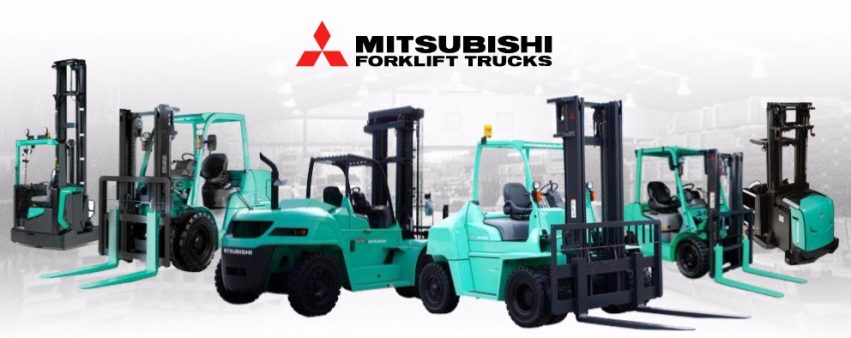
Mitsubishi Forklift Trucks is a brand used for material handling products manufactured and distributed by Mitsubishi Logisnext Co., Ltd. - Mitsubishi Logisnext Co., Ltd. specializes in the design, development and manufacturing of logistics systems. The company was established in 1937 as a subsidiary of Mitsubishi Heavy Industries, Ltd. (MHI) and has grown to become one of the world's leading providers of logistics solutions. The forklift brand of Mitsubishi was established in 1992 when Mitsubishi Heavy Industries, Ltd. (MHI) entered into a joint venture with Caterpillar Inc.
Mitsubishi Logisnext Co., Ltd offers a diverse range of products and services, including Automated Storage and Retrieval Systems (AS/RS), conveyor belt systems, picking systems, sorting systems and Warehouse Management Software (WMS). The company has a network of over 200 distributors and dealers worldwide serving customers in various industries including automotive, food and beverage, electronics, E-Commerce, retail and pharmaceuticals.
Mitsubishi in The New Era
In 1916, Koyata Iwasaki took over as the president from his father Yanosuke. Koyata who had graduated from the University of Cambridge ushered Mitsubishi into a new era by consolidating various departments into independent companies. As the president of Mitsubishi he became a leader in the fields of electricity, machinery and chemicals through the establishment of the independent company AS Koyata. In 1934, these companies merged to form Mitsubishi Heavy Industries producing various products ranging from airplanes, automobiles, tanks and buses. The impact of World War II directly affected Mitsubishi and the organizational structure. The Iwasaki family gradually lost ownership of the company and several key subsidiaries went public. Towards the end of the war half of the company's shares were held by investors. Eventually, Mitsubishi's headquarters were dissolved leading to the establishment of numerous independent organizations.In 1946, various companies that were part of Mitsubishi discontinued the use of the name and logo due to pressure from the occupying forces. In 1954, the group of 100 companies that had once been part of Mitsubishi started to regroup reintroducing the original name and logo of Mitsubishi. Mitsubishi began to thrive again in the 1950s and 60s, expanding both its existing branches and venturing into new businesses continuously.
In the past few years Mitsubishi's forklift brand has expanded its business beyond Japan with a focus on the Asia-Pacific region. The company has established manufacturing plants in China and Thailand and has plans to build a new regional headquarters in Singapore.
Looking towards the future, Mitsubishi's forklifts are dedicated to offering innovative logistics solutions. These solutions aim to help customers enhance production efficiency and competitiveness. The company will continue to invest in research and development, and expand its global sales and service network to better meet the evolving needs of its customers.
There's no denying that Mitsubishi's history is long and storied, full of ups and downs. One thing for sure, Mitsubishi is a company that knows how to leave a lasting impression. From its early days as a shipping company to its latest successes in the automotive and aerospace industries, Mitsubishi is a force to be reckoned with and a name that commands attention throughout its journey.