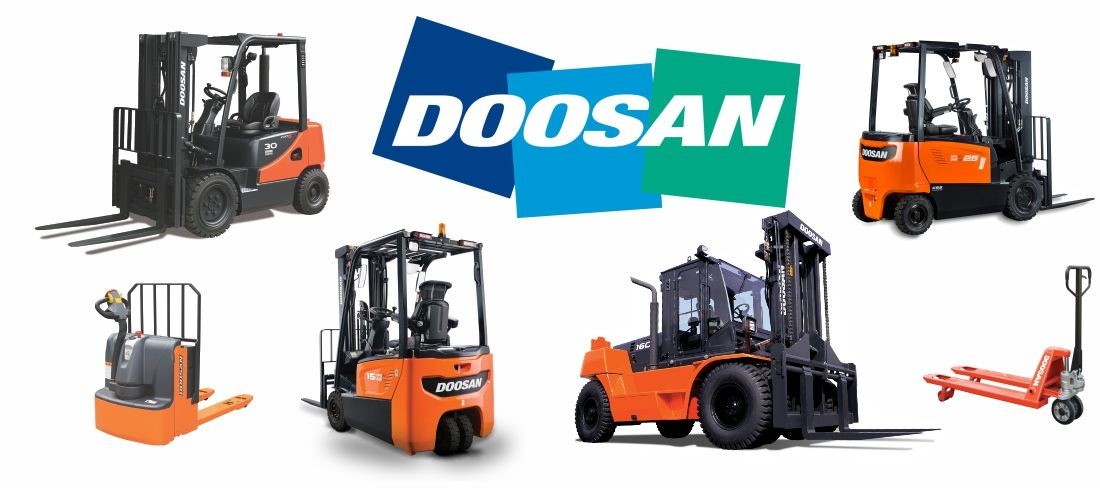



Daewoo-Doosan History
Daewoo-Doosan is an international company engaged in the industrial machinery, construction equipment, and energy industry. The company was founded in 1896 in Seoul, South Korea. Popular products of the company include forklifts, construction equipment, diesel engines and turbine.
The Daewoo-Doosan brand is a key player in the global market, and they are dedicated to creating innovation and sustainability. With this commitment, they have been recognized for success in both business and social responsibility. Currently, Daewoo-Doosan is a well-respected company with a long history and a stable future.
Starting The Forklift Business, Daewoo-Doosan
In the late 1960s, the forklift market in South Korea began to evolve into an open import market when Korea Machinery Co., Ltd started importing assembled forklifts. It was part of an industrial machinery sales expansion project that aimed at state organizations, the military, and large business groups. This eventually led to the consolidation of business operations by Daewoo Heavy Industries Ltd. in 1967. The forklift division aimed to establish businesses throughout Korea for the sale and service of this equipment. In 1977, the forklift manufacturing plant was completed, focusing on product development and importing quality through continuous technical training.
Expansion of Forklift Exports
Daewoo's forklift business started in 1967 and grew to capture a 90% market share in South Korea during the 1980s. Daewoo's technology and improvements allowed them significant growth opportunities in the forklift business. In 1981, Caterpillar (CAT) from the United States proposed a forklift joint venture to cope with competitive pressures in the material handling industry in the United States. This significantly improved Daewoo's forklift business. In 1984, the completion of a new manufacturing plant helped establish a foundation for producing high-value-added products for export. In 1993, the company became well-known and established a global sales network, initiating exports of models developed with in-house technology under the independent brand. Subsequently, the company received certifications such as CE from Europe, UL from the United States, ISO 9001, and ISO 14001.
New Model Development
In 1998, the forklifts underwent development of new models starting with the G5 series (internal combustion forklifts in the 1.5 - 3.0 ton range). A three-year R&D program led to the development of new technologies for engines, hydraulic systems, and power transmission. The quality of the products was ensured through rigorous testing for durability and performance multiple times. The reliability of the products, especially critical components, has achieved success from the company's reliability assessment center over the years. There have been significant changes in the convenience for operators and environmental friendliness, resulting in highly satisfied customers. The sales department has conducted post-sales surveys on a large scale, which is part of the new marketing strategy for this new truck series. The G5 model is globally recognized for its reliability, durability, and user-friendly features.
Worldwide Distributor Network
To expand its market internationally, the company has established parts-sourcing bases in the United States, Belgium, Brazil, and Singapore. Additionally, the company has implemented a new distributor system with 550 distributors in 90 countries worldwide. This distributor network offers a variety of truck models, including over 150 models with electric and internal combustion engine options, catering to the diverse needs of customers in the material handling market.