

TCM Forklift History
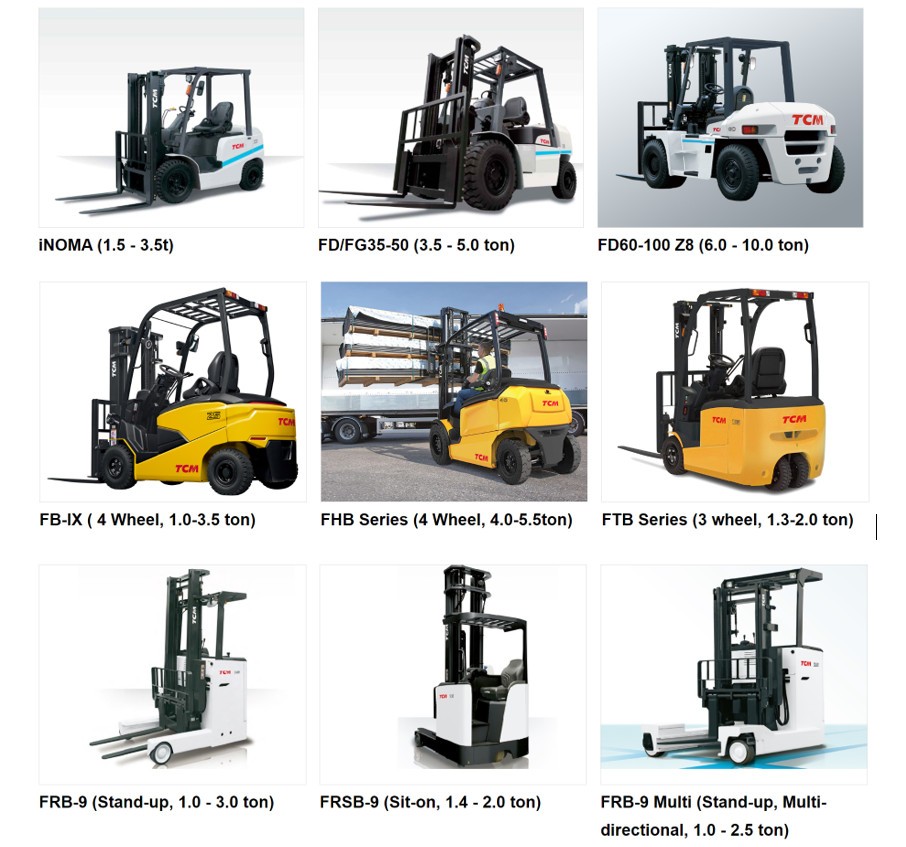
History - In 1949, Toyo Umpanki Manufacturing Company LTD was founded and produced the first forklift in Japan. The outstanding success of their products, under the name TCM (Toyo Carriers Manufacturing), attracted other Japanese manufacturers into the material handling equipment business, leading to continuous growth. Toyo expanded into international markets, collaborating with original trading companies like Cascade Corporation, Joshua Shaw LTD (side loaders), and Clark Equipment (tire forklifts). With various product lines, including internal combustion engine forklifts, electric counterbalance forklifts, high lift trucks, and mastless trucks, TCM became a highly recognized brand in the global material handling industry.
In 1961, the company changed its name to Toyo Umpanki Co. LTD., TCM, and was registered on the Japanese stock market. TCM forklifts made their debut in the United States market in 1965, with Toyo Umpanki making efforts to distribute from St. Louis, Missouri, and taking responsibility for distribution in the U.S. market. TMC America, Inc. was established, with its main office located in Bridgeport, New Jersey.
This operation is one of the most successful marketing efforts in the history of materials handling. TCM established a large network of dealers for the first time to distribute and service its products. Fortune 500 companies became regular customers, and currently, some subsidiaries operate in more than 200 units. One notable customer of TCM is the United States government, which once placed an order for 1,000 trucks to meet its needs. In March 1989, Toyo Umpanki Company began manufacturing new forklifts in a new 165,000-square-foot facility located in Columbia, South Carolina, USA. This facility brought together skilled craftsmen with automation machinery to produce the highest quality forklifts in the world. In 1999, the company celebrated its 50th anniversary. In July of that year, the company changed its abbreviation to TCM Corporation. Then, in June 2005, TCM took over distribution and responsibility from Mitsui.
In 1999, TCM changed its company name to TCM Corporation, and in 2001, TCM Asia Distribution Co., Ltd., now known as UniCarriers Asia Co., Ltd., was established in Thailand to serve as the regional sales office for Southeast Asia.
In 2012, TCM Corporation joined the UniCarriers group in August, and in 2017, Mitsubishi Logisnext became the provider of TCM products.
Choosing Suitable TCM Forklift Parts
When selecting parts for your TCM forklift, it is crucial to choose components that are suitable for your specific model and usage. This ensures that your forklift continues to operate safely and efficiently.
When selecting parts for your TCM forklift, there are some considerations to keep in mind:
- Make sure that the part is compatible with the specific model of your forklift.
- To ensure that your forklift performs at its best and has a long lifespan, please use only genuine TCM parts.
- Verify that the parts conform to all safety standards.
- Check the warranty on replacement parts.
- Choose a parts supplier with a reputable and reliable name.
- Compare prices to get the best offer.
How Often Should I Change My TCM Forklift Parts?
The important thing is to consult your vehicle owner's manual for specific guidelines on the frequency of replacing TCM forklift parts. However, as a general principle, regular inspections and replacements should be carried out. Check your forklift regularly and replace any worn or damaged parts. This will help ensure that your forklift operates smoothly and safely.
Common Problems With TCM Forklifts and How To Fix Them?
Forklifts are essential equipment in many warehouses and factories. However, they often require regular maintenance to operate smoothly. Some common issues that are frequently encountered with TCM forklifts include:
- Brake Malfunction - If the brakes on the forklift are not functioning properly, it can be particularly dangerous. Ensure that regular inspections are conducted by a qualified technician to make sure everything is in order.
- Hydraulic Oil Leaks - Hydraulic oil leaks can be a significant issue for forklifts. If you notice any leaks, it is advisable to have a skilled mechanic address the repair promptly.
- Tire Wear - Worn tires can cause the forklift to slide and slip, posing potential dangers. Remember to regularly inspect the tire treads and replace them when necessary.
- A dead battery is one of the most common issues encountered with electric forklifts. Make sure to regularly check the battery and replace it when necessary.
- Chain Breakage - A broken chain can potentially lead to the overturning of the forklift. Ensure that you regularly inspect the chains and replace them when necessary.
The TCM forklift is robust and reliable, but like any machinery, it can occasionally experience issues. Being aware of the most common problems can help ensure the smooth operation of your forklift and avoid potential accidents.
Tips For Maintaining Your TCM Forklift
If you use a TCM forklift, it is important to familiarize yourself with the best maintenance practices. Here are some tips:
- Make sure to keep your forklift clean at all times. This practice helps prevent dust buildup and ensures the smooth operation of the machine.
- Check and maintain consistent tire pressure, and inflate the tires to the appropriate level. This will help improve fuel efficiency and prevent premature tire wear.
- Changing the engine oil and filters regularly is essential. This helps keep the engine clean and operating efficiently.
- Checking the brakes regularly and ensuring they are in good condition is crucial. This helps prevent accidents and ensures the forklift operates safely.
- Checking the battery regularly and ensuring it is properly charged is essential. This method helps prevent energy loss and ensures smooth operation of the forklift.
- Maintaining chains and sprockets in good condition helps prevent wear and ensures smooth operation of the forklift.
- Following the manufacturer's maintenance schedule helps ensure that the forklift operates correctly and safely.